
Project
Orbital Oscillation
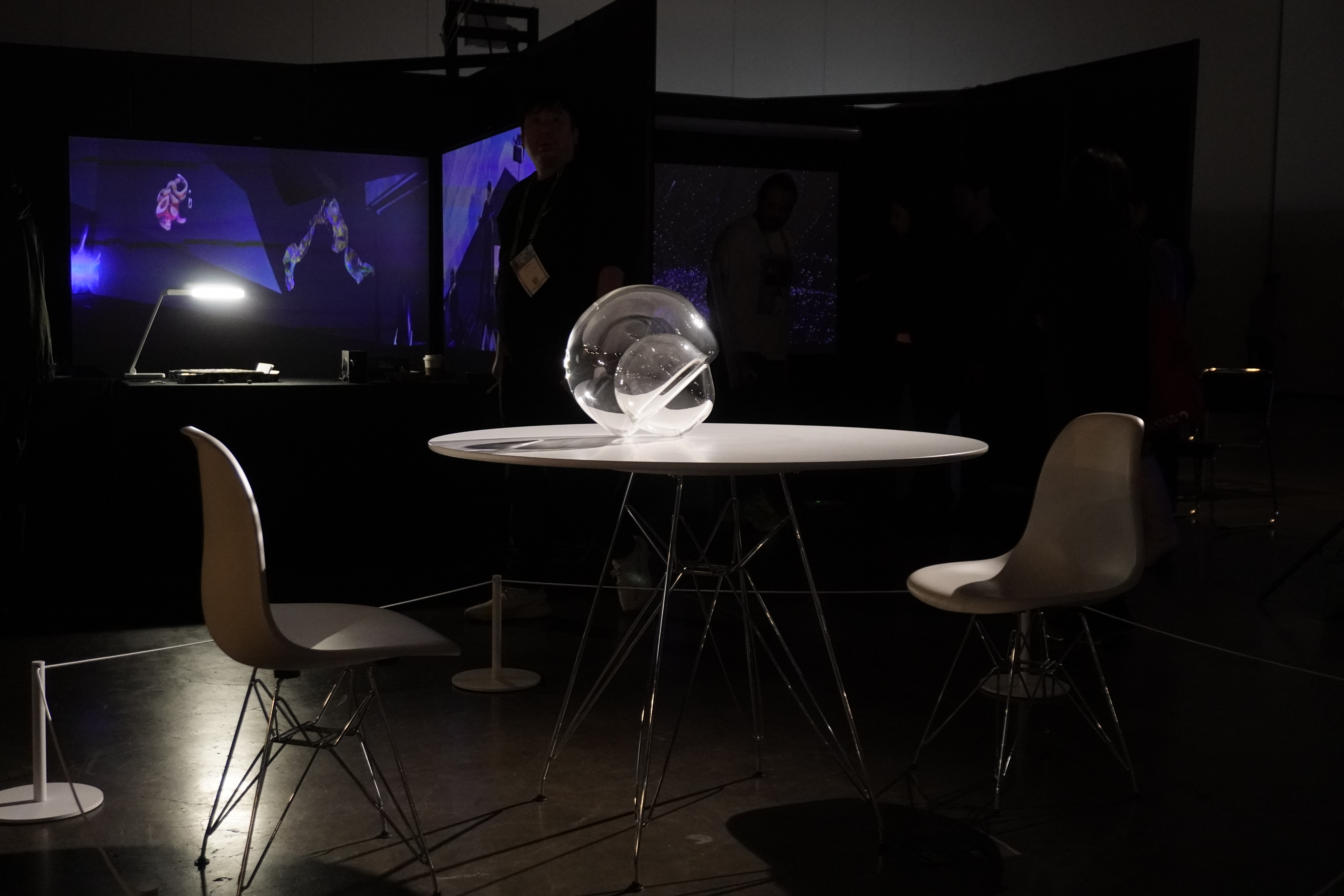
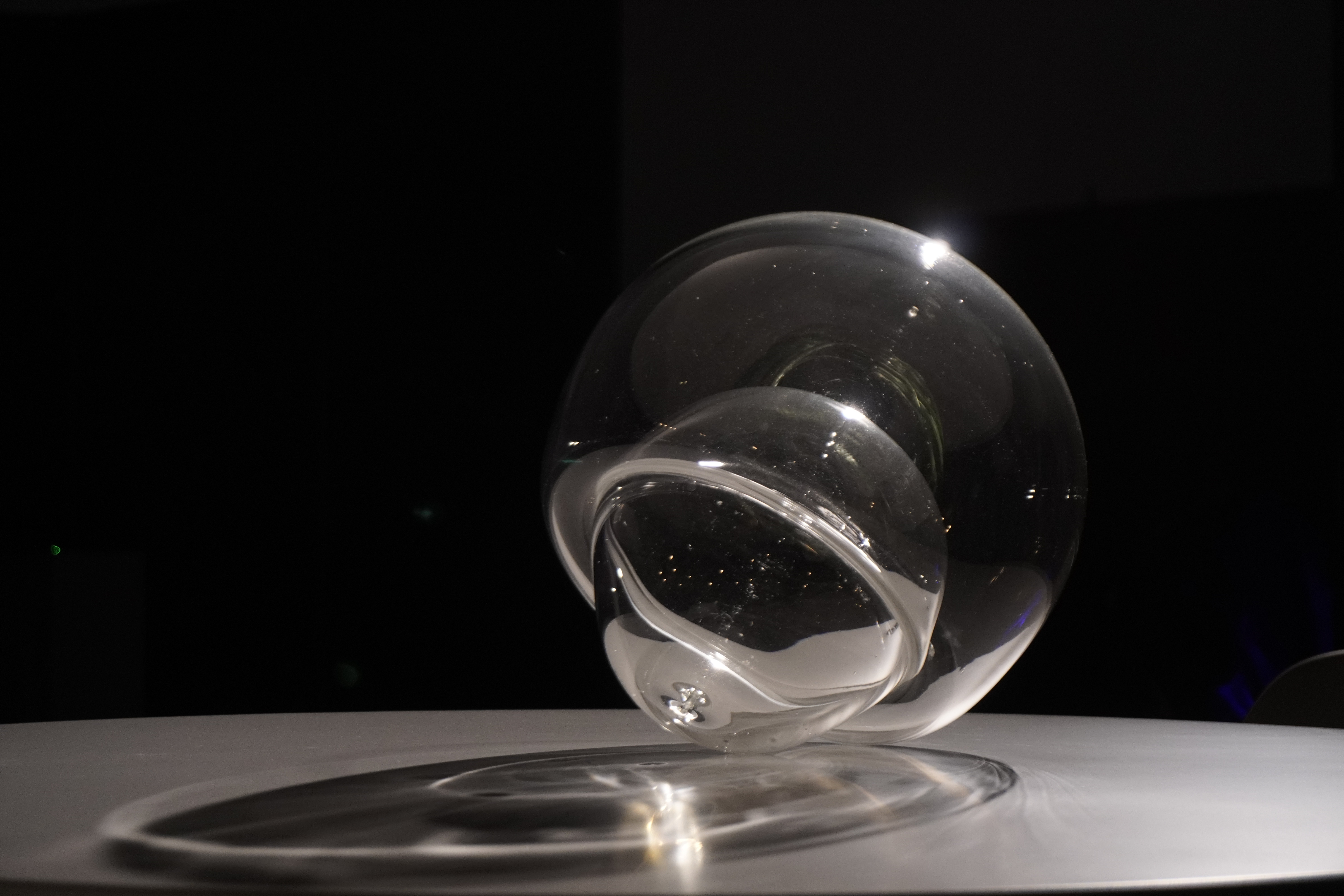
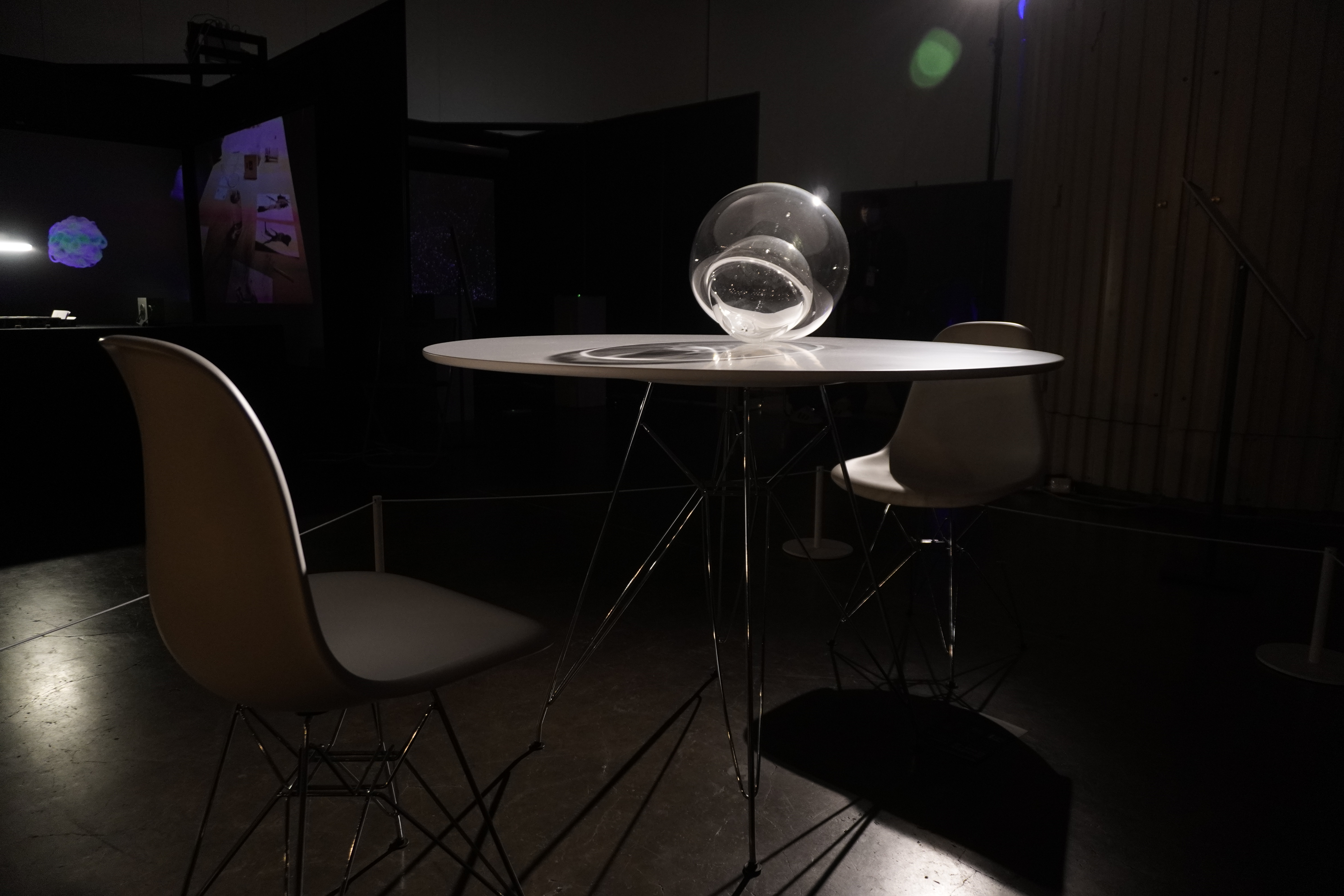
Orbital Oscillation is a kinetic sculpture exploring the phenomenology of time through the imperceptible actuation of a hand-blown glass object. The work presents a glass sphere rolling in slow, deliberate orbits on a minimalist table, its motion appearing autonomous yet precisely orchestrated by hidden robotic mechanisms beneath the surface. This concealment of technical agency—achieved through silent tilting actuators, real-time feedback control, and load-cell sensing—creates a perceptual tension: viewers witness motion without causality, inviting reflection on the relationship between visibility, agency, and expectation.
Conceptually, the work engages Husserl’s model of internal time consciousness (retention, impression, protention), using cyclical motion and subtle disruptions to materialize the viewer’s anticipatory experience. By destabilizing rhythmic predictions—accelerating, reversing, or pausing the glass’s trajectory—the sculpture foregrounds the fragility of perception itself. Philosophically, it resists Heidegger’s Gestell, rejecting technological transparency in favor of techne as poetic disclosure: the mechanism remains invisible, allowing the object to "self-move" while quietly embodying Yuk Hui’s cosmotechnics through planetary-like rhythms.
This work extends our earlier investigations in Digital Craft, where digital tools mediated material memory (e.g., 3D-printed scaffolds preserving glass fragments). Here, craft dematerializes: computation shifts from shaping physical form to choreographing temporal behavior. The glass, once constrained by visible structures, now rolls freely within an invisible technological framework—a transition from fabrication to temporal poetics. Engineering serves artistry not through spectacle but through restraint, rendering machine intelligence as a silent collaborator in an unfolding meditation on time, presence, and the unseen infrastructures shaping both.
Orbital Oscillation is a kinetic sculpture where a glass object rolls autonomously on a table, actuated by hidden mechanisms. Concealed tilting systems and real-time sensing create imperceptible motion, exploring time perception (Husserl) and technological poetics (Heidegger). The work dematerializes craft, shifting from physical structures to choreographed temporal experience. Orbital Oscillation is made by Tobias Klein and Leung Pok Yin Victor.
#Installation
Publications


ADDRESS
School of Creative Media,
City University of Hong Kong, 18 Tat Hong Avenue, Kowloon Tong, Hong Kong
CONTACT
info@awesomelab.studio
SOCIAL
Youtube
Project
Orbital Oscillation
Orbital Oscillation is a kinetic sculpture exploring the phenomenology of time through the imperceptible actuation of a hand-blown glass object. The work presents a glass sphere rolling in slow, deliberate orbits on a minimalist table, its motion appearing autonomous yet precisely orchestrated by hidden robotic mechanisms beneath the surface. This concealment of technical agency—achieved through silent tilting actuators, real-time feedback control, and load-cell sensing—creates a perceptual tension: viewers witness motion without causality, inviting reflection on the relationship between visibility, agency, and expectation.
Conceptually, the work engages Husserl’s model of internal time consciousness (retention, impression, protention), using cyclical motion and subtle disruptions to materialize the viewer’s anticipatory experience. By destabilizing rhythmic predictions—accelerating, reversing, or pausing the glass’s trajectory—the sculpture foregrounds the fragility of perception itself. Philosophically, it resists Heidegger’s Gestell, rejecting technological transparency in favor of techne as poetic disclosure: the mechanism remains invisible, allowing the object to "self-move" while quietly embodying Yuk Hui’s cosmotechnics through planetary-like rhythms.
This work extends our earlier investigations in Digital Craft, where digital tools mediated material memory (e.g., 3D-printed scaffolds preserving glass fragments). Here, craft dematerializes: computation shifts from shaping physical form to choreographing temporal behavior. The glass, once constrained by visible structures, now rolls freely within an invisible technological framework—a transition from fabrication to temporal poetics. Engineering serves artistry not through spectacle but through restraint, rendering machine intelligence as a silent collaborator in an unfolding meditation on time, presence, and the unseen infrastructures shaping both.
Orbital Oscillation is a kinetic sculpture where a glass object rolls autonomously on a table, actuated by hidden mechanisms. Concealed tilting systems and real-time sensing create imperceptible motion, exploring time perception (Husserl) and technological poetics (Heidegger). The work dematerializes craft, shifting from physical structures to choreographed temporal experience. Orbital Oscillation is made by Tobias Klein and Leung Pok Yin Victor.
#Installation
2025
Publications


ADDRESS
School of Creative Media, City University of Hong Kong, 18 Tat Hong Avenue, Kowloon Tong, Hong Kong
CONTACT
info@awesomelab.studio
SOCIAL
Youtube
Project
Orbital Oscillation
Orbital Oscillation is a kinetic sculpture exploring the phenomenology of time through the imperceptible actuation of a hand-blown glass object. Orbital Oscillation is a kinetic sculpture exploring the phenomenology of time through the imperceptible actuation of a hand-blown glass object. The work presents a glass sphere rolling in slow, deliberate orbits on a minimalist table, its motion appearing autonomous yet precisely orchestrated by hidden robotic mechanisms beneath the surface. This concealment of technical agency—achieved through silent tilting actuators, real-time feedback control, and load-cell sensing—creates a perceptual tension: viewers witness motion without causality, inviting reflection on the relationship between visibility, agency, and expectation.
Conceptually, the work engages Husserl’s model of internal time consciousness (retention, impression, protention), using cyclical motion and subtle disruptions to materialize the viewer’s anticipatory experience. By destabilizing rhythmic predictions—accelerating, reversing, or pausing the glass’s trajectory—the sculpture foregrounds the fragility of perception itself. Philosophically, it resists Heidegger’s Gestell, rejecting technological transparency in favor of techne as poetic disclosure: the mechanism remains invisible, allowing the object to "self-move" while quietly embodying Yuk Hui’s cosmotechnics through planetary-like rhythms.
This work extends our earlier investigations in Digital Craft, where digital tools mediated material memory (e.g., 3D-printed scaffolds preserving glass fragments). Here, craft dematerializes: computation shifts from shaping physical form to choreographing temporal behavior. The glass, once constrained by visible structures, now rolls freely within an invisible technological framework—a transition from fabrication to temporal poetics. Engineering serves artistry not through spectacle but through restraint, rendering machine intelligence as a silent collaborator in an unfolding meditation on time, presence, and the unseen infrastructures shaping both.
Orbital Oscillation is a kinetic sculpture where a glass object rolls autonomously on a table, actuated by hidden mechanisms. Concealed tilting systems and real-time sensing create imperceptible motion, exploring time perception (Husserl) and technological poetics (Heidegger). The work dematerializes craft, shifting from physical structures to choreographed temporal experience. Orbital Oscillation is made by Tobias Klein and Leung Pok Yin Victor.
#Installation
2025
Publications


ADDRESS
School of Creative Media, City University of Hong Kong, 18 Tat Hong Avenue, Kowloon Tong, Hong Kong
CONTACT
info@awesomelab.studio
SOCIAL
Youtube